Sleep foundations · Materials guide
Chemical-Free Sleep Foundations: What to Check Before You Choose
The phrase “chemical-free” may sound reassuring, but it does not tell you what a mattress is made of, how it was treated, or which parts of its construction have been independently assessed. A closer look at materials, product disclosures, and certification standards can turn a vague promise into useful questions—and help you choose a sleep surface with greater confidence.
Published October 15, 2026
At night, a mattress is a small landscape: layers of fabric, padding, foam, springs, and barriers assembled beneath a fitted sheet. Some components come from plants or animals; others are manufactured through complex industrial processes. The surface may feel simple and quiet, yet its construction can involve a long chain of materials, treatments, and suppliers.
That complexity is one reason “chemical-free mattress” can be a difficult claim to interpret. In everyday language, the phrase often means a product made with fewer synthetic materials or without certain substances of concern. Taken literally, however, it is not a useful description: all physical materials are composed of chemicals, including cotton, wool, water, and air. A better question is not whether a product contains chemicals, but which substances are present, why they are used, and what reliable information supports the claims.
For people exploring organic mattresses or more transparent bedding, the goal is not to find a magical label. It is to understand the sleep foundation in front of you. That means reading beyond the headline, identifying each major component, and checking whether a certification applies to the finished product, a specific material, or only one stage of production.
What “chemical-free” can—and cannot—tell you
Marketing language tends to compress a complicated subject into a few easy words. “Natural,” “clean,” “non-toxic,” and “chemical-free” may all appear on bedding labels, but they do not necessarily describe the same qualities. Nor do they automatically indicate that a mattress has been tested against a defined standard.
A material described as natural may be derived from a plant or animal, yet still be processed, blended, dyed, or finished. Conversely, a synthetic material may be manufactured to meet specific emissions or safety requirements. The origin of a component and its performance in a finished mattress are related questions, but they are not interchangeable ones.
There is also a difference between an ingredient claim and an exposure claim. A product might state that it is made without a particular additive. That statement does not, by itself, describe every other ingredient, treatment, or emission associated with the product. Similarly, a low-emissions certification can provide information about tested emissions under a particular protocol, but it does not mean that every substance in the mattress has been eliminated.
Think of the phrase “chemical-free” as a prompt to investigate, not as proof. Ask the manufacturer to identify what is excluded and how that exclusion is verified. Specific answers are more meaningful than broad reassurance.
Start with the full construction
Mattresses are layered systems. A cover can be made from cotton or a blend; the comfort layers may contain latex, polyurethane foam, wool, or fiber fill; and the support core might use foam, springs, or a combination. A fire barrier, adhesive, backing fabric, zipper, or quilting thread may also be part of the construction.
When reviewing sleep foundation materials, look for a complete description rather than a list limited to the most appealing components. A mattress advertised as “organic cotton” may refer only to its cover. That can be valuable information, but it does not establish the contents of the foam, internal barrier, or other layers. Likewise, a wool fire barrier does not automatically mean the entire mattress is certified organic.
Useful disclosures name materials by layer and clarify whether they are blends. “Natural latex,” for instance, may be made using different processes and may include other ingredients. If a specification says only “foam,” ask what type of foam it means. If it says “plant-based,” ask what proportion comes from plant-derived feedstock and what the rest contains. These questions are not an accusation; they are a way to understand what you are bringing into your home.
Also check whether the information covers the mattress as sold, including its cover and fire barrier, or just a material used within it. A clear bill of materials is particularly helpful when comparing products whose top-line descriptions sound alike.
Understand the materials in context
Cotton and other textiles
Cotton can be used in covers, ticking, quilted panels, and mattress pads. Organic status concerns how the cotton was grown and handled under a defined standard; it does not necessarily describe every treatment applied to a finished textile. Check whether a claim refers to the fiber, the fabric, or the complete item. A mattress may have an organic cotton cover while containing other materials that are not organic.
Textile finishes also matter to some shoppers. Ask whether the fabric is dyed or treated for wrinkle resistance, water repellency, or another function, and whether those treatments are disclosed or covered by a certification. The answer may depend on the exact product and its supply chain.
Wool
Wool is used in mattress padding and fire barriers, among other applications. It can help manage warmth and moisture, but the word “wool” alone does not tell you the source, processing, or certification status. Look for details about the wool’s origin, whether it is blended with other fibers, and what the seller means by terms such as “organic,” “traceable,” or “untreated.” These terms each need their own evidence.
Latex
Latex mattresses may use latex derived from rubber-tree sap, often called natural latex, and may be made through processes such as Dunlop or Talalay. A mattress can combine latex with cotton, wool, fabric, and other components. Ask whether the latex is certified and what that certification evaluates. If you have a latex allergy or other relevant medical concern, consult a qualified healthcare professional rather than relying on a marketing description or certification to determine personal suitability.
Foam and other engineered materials
Foam is not one single material. Different types have different formulations and characteristics, and a product’s label may not disclose every ingredient. Ask the manufacturer for the foam type, any available emissions testing, and whether the foam contains added substances that are relevant to your concerns. “Plant-based foam” does not mean that the entire foam is plant-derived, nor does it automatically establish an emissions or safety result.
Read certifications as carefully as labels
Independent certification can make a claim more useful by setting criteria and requiring some form of review. But certifications vary in scope. One may focus on organic fiber production; another may assess emissions, material inputs, or factory practices. A certification’s name alone is not enough: find out what it covers and which components of the product are included.
For example, GOTS—the Global Organic Textile Standard—sets criteria for organic fibers and textile processing. Its scope concerns textiles and the production chain described by the standard; it should not be treated as proof that every non-textile part of a mattress is organic. Other programs focus on latex, foam emissions, or chemical-content restrictions. The relevant question is always: what exactly has been certified?
When you see a badge, look for the certification body, the standard version or program, and a way to verify the claim. Determine whether the certificate applies to the finished mattress, a fabric, a component, or a facility. A product may contain a certified material without the entire product carrying that certification.
Certification is not a substitute for understanding a product, and absence of a particular badge does not automatically mean a mattress is unsafe. It is one piece of evidence among several. Stronger product disclosures make clear what was assessed, by whom, and where the limits of the claim lie.
Questions that make product claims clearer
A well-informed comparison starts with a short list of practical questions. Contact the manufacturer if product pages leave gaps, and keep the answers alongside the specifications you are comparing.
- What materials are used in every major layer, including the cover, comfort layers, support core, and fire barrier?
- Are any materials blends? If so, what are the components and proportions, where disclosed?
- What does “organic,” “natural,” or “chemical-free” refer to in this specific product?
- Which certifications apply, and do they cover the finished mattress or only particular materials?
- Is there publicly available information about emissions testing, and what standard or protocol was used?
- Are adhesives, dyes, water repellents, or other finishes used? Are these details available for the product version being sold?
- How should the mattress be cared for, and does the care guidance affect the cover or materials?
- Can the company provide current documentation, rather than relying only on a general brand statement?
Clear, measured answers are a good sign of transparency. If a retailer cannot answer every technical question, ask whether the manufacturer can provide documentation. Be cautious of absolute promises that do not define their terms or offer evidence. A useful response should explain both what is known and what a certification or test does not establish.
Compare products without chasing a perfect label
Two mattresses may use similar materials yet differ in construction, disclosures, and certifications. Comparing them component by component is more informative than ranking them by a single word. A product with a detailed specification can be easier to assess than one with a sweeping “clean” claim and little supporting information.
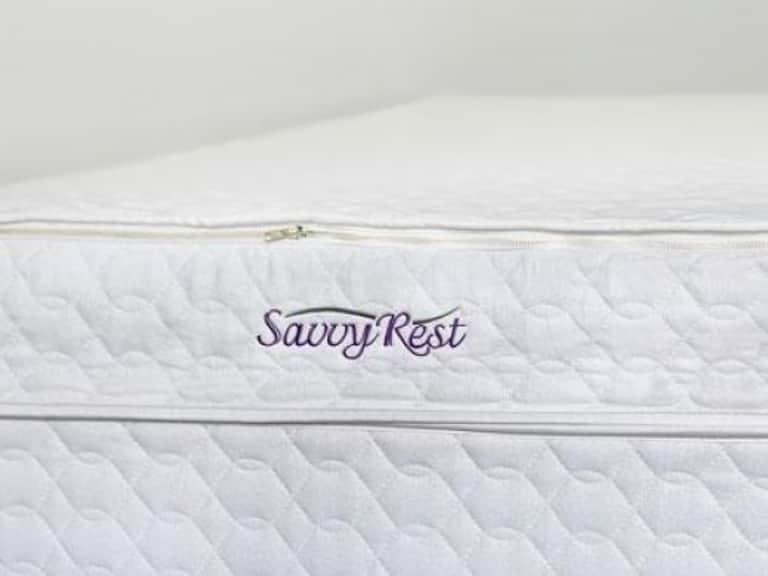
For instance, the Savvy Rest Tranquility Latex Mattress is described as having two layers of Dunlop natural latex, with alternative latex configurations available, an organic cotton casing, and an organic wool flame barrier. Those details give shoppers specific components to examine. They do not mean that every part of the mattress is identical in origin or certification scope, so readers should verify the current documentation and the exact configuration they are considering.
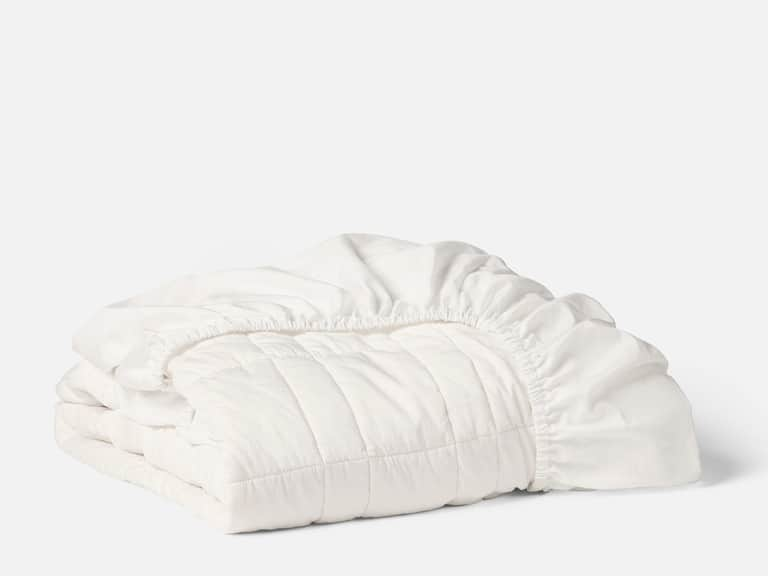
Likewise, bedding added on top of a mattress has its own material profile. The Washable Wool Filled Mattress Pad is described as using a blend of NATIVA wool and plant-based batting, with an organic sateen shell. That information concerns the pad, not the underlying mattress. A pad may alter the feel of a sleep surface and help protect it, but it cannot change the composition or certification status of the mattress beneath.
These examples illustrate a useful habit: keep product claims attached to the specific item and component they describe. A material detail from one layer should not be generalized to the whole bed.
Consider the purpose of each layer
Materials are not chosen only for their origin. Each layer serves a function: cushioning, support, temperature management, durability, or protection. A fiber that feels comfortable to one sleeper may feel too warm or too firm to another. A mattress’s performance depends on the complete construction and how it suits the person using it.
Firmness is not a measure of material purity, and a certification cannot tell you whether a mattress will feel right for your body. Consider sleeping position, comfort preferences, the base you will use, and any requirements from a clinician. If you share a bed, differences in preferred firmness and temperature may also shape the choice.
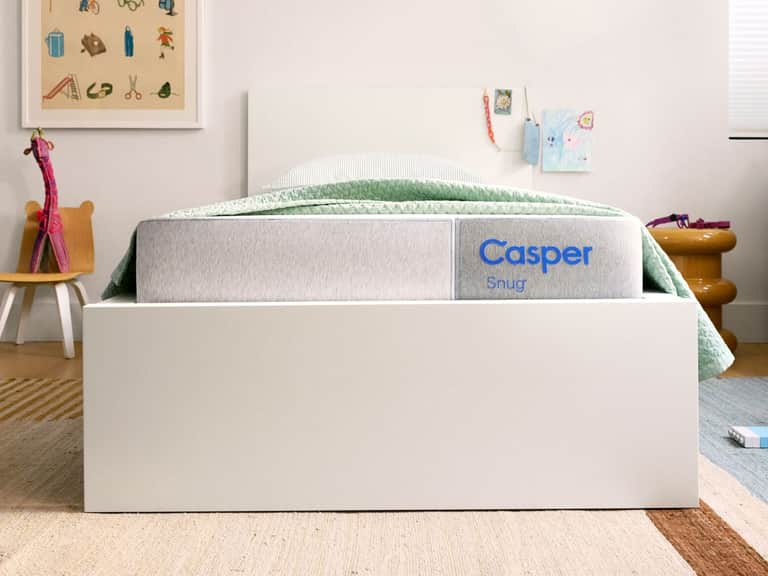
For children and other sleepers with specific needs, safety questions deserve particular care. Follow the relevant sleep-safety guidance for age and circumstance, and do not add toppers, pads, or accessories to a sleep space unless they are appropriate for that use. A product described as natural or organic is not automatically suitable for every person or setting.
A practical checklist before you decide
- Write down your priorities. Decide whether you are most concerned with organic fiber, emissions information, avoiding a named substance, material traceability, comfort, or care requirements.
- Map the layers. Record the cover, fill, support structure, and barrier materials. Mark any layers described only in general terms.
- Separate claims from evidence. For each promise, note whether it is a manufacturer statement, a test result, or a third-party certification.
- Check the scope. Confirm whether a standard covers the finished mattress, one component, a textile, or a manufacturing process.
- Ask about missing information. Request current product-specific details and keep the response for comparison.
- Balance material goals with practical fit. Consider comfort, care, construction, warranty terms, and suitability for your sleep setup alongside certifications.
This process need not become an investigation of every molecule. The aim is to replace a vague impression with a reasonable level of understanding. Shoppers can then choose according to their priorities without assuming that a single label answers every question.
The value of precise language
Sleep is intimate, but choosing a mattress is also an exercise in reading evidence. A label is a map, not the territory. The important details lie in the construction, in the standards behind the claims, and in the limits of what those standards measure.
Rather than searching for a product that is literally “chemical-free,” look for a transparent description of materials and processes, independently verified claims where relevant, and answers that address your own concerns. Organic status, emissions testing, natural fibers, and product safety each describe different things. Understanding those distinctions helps keep marketing language in proportion.
In the end, a sleep foundation is not defined by one ingredient or one badge. It is a layered object, made through a chain of decisions. When those decisions are clearly disclosed, you can compare them with care—and choose a bed that makes sense for your household, your comfort, and the information you value most.
Quick takeaways
- “Chemical-free” is a broad marketing phrase, not a complete materials specification.
- Check every major mattress layer, including the cover, foam or latex, support core, and fire barrier.
- Certifications have defined scopes; verify which materials or processes they cover.
- Distinguish a manufacturer’s claim from independent testing or certification.
- Use detailed disclosures to compare products, while also considering comfort, care, and suitability.