Sleep & Bedding
How Adjustable Beds Change Sleep Position and Comfort
A bed that moves can turn a familiar flat surface into a series of possible resting places. Raising the head or legs may make reading more comfortable or help someone settle into a preferred posture—but an adjustable base is not automatically a better night’s sleep. Its value depends on the fit between the frame, mattress, bedding, and the person using it.
A thoughtful approach begins with small changes, careful compatibility checks, and attention to how a position feels over time.
A bed with more than one shape
Most beds hold one steady plane: a mattress lies flat, and the sleeper adjusts around it. An adjustable bed reverses that relationship. A powered or manually operated base can lift the head, the legs, or both, changing the angle of the mattress beneath the body. Some models offer preset positions; others allow finer adjustments. The result is not a new kind of sleep so much as a new set of choices about posture.
Those choices can matter during the hours before sleep, when a person reads, watches a program, or simply wants to sit up without stacking pillows. They can also shape the way someone rests overnight. A slight incline may feel preferable to lying completely flat, while raising the legs can change pressure and support around the lower body. But there is no universally correct angle. A position that feels soothing to one sleeper may feel awkward to another.
It helps to think of bed elevation as an experiment in comfort rather than a treatment or guaranteed solution. Adjustable beds do not diagnose or cure health conditions, and a change in position should not replace advice from a qualified health professional. For persistent pain, breathing difficulties, reflux, or other health concerns, seek medical guidance about appropriate sleeping positions.
What changes when the head or legs rise?
When the head end lifts, the upper body follows the mattress into a gentle incline. The shift can make conversation, reading, or getting out of bed feel easier for some people. It also changes how pillows meet the head and neck. A tall pillow that works well on a flat mattress may push the chin forward on an incline; a lower or differently shaped pillow may feel more natural.
Raising the legs changes the relationship between the hips, knees, and lower back. Some people like a slight bend at the knees when resting, while others prefer their legs level with the torso. The sensation depends on individual proportions, the mattress’s response, and how far the base moves. A setting that looks modest from across the room can feel surprisingly different once the body settles into it.
Many adjustable frames can lift both sections, creating a gently bent posture sometimes described as a lounge or zero-gravity position. The name can sound like a promise, but the position is simply one possible configuration. It is not weightlessness, nor is it guaranteed to relieve discomfort. Treat presets as starting points: adjust gradually, notice pressure or strain, and return to flat if the position feels wrong.
Most important, movement at the base does not change the fundamentals of sleep. A comfortable room, consistent routines, and bedding suited to the sleeper remain important. An adjustable frame changes the geometry of the sleep surface; it cannot make an unsuitable mattress supportive or compensate for habits that interfere with rest.
Begin with the frame and mattress
Before trying elevation, confirm that the mattress is designed to flex with the adjustable base. As the platform bends, the mattress must move without buckling, shifting excessively, or placing unusual stress on its construction. Compatibility can depend on the mattress’s materials, thickness, internal design, and the specific base. Check both manufacturers’ instructions rather than assuming that a mattress will work because it fits the frame’s dimensions.
Foam and latex mattresses are often made to bend, but their suitability still depends on their design and the base’s requirements. Innerspring and hybrid models vary considerably. Some flex well; others may be unsuitable or may require a particular type of adjustable platform. A mattress warranty may also specify which foundations are acceptable. When information is unclear, ask the manufacturer before purchasing or operating the equipment.
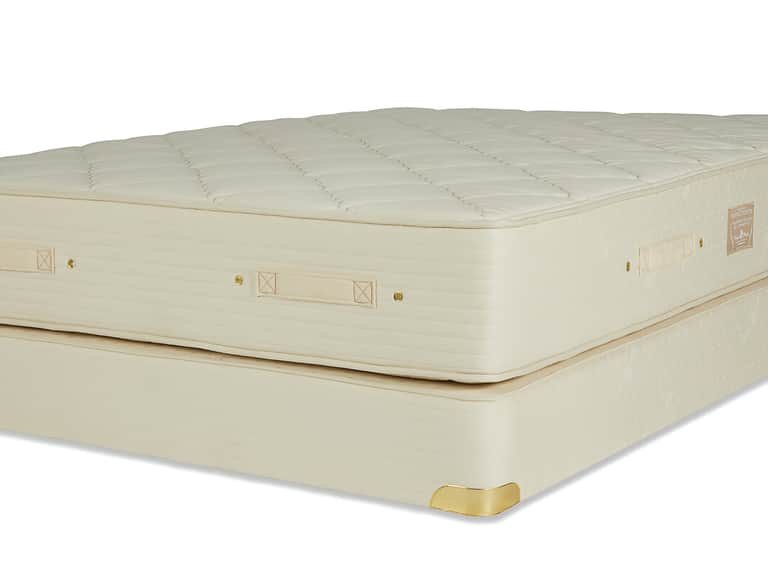
For example, the product details for the Royal-Pedic Natural Latex Quilt-top Mattress state that it may be used on an adjustable bed base. That compatibility note is useful, but it should not be treated as proof that every adjustable frame will work equally well with it. The base’s own limits, mattress size, and setup instructions still matter.
Check the frame’s weight capacity and intended use, including the combined weight of the mattress, bedding, and sleepers. If the bed is shared, make sure the base is designed for the arrangement you have in mind. Split bases can allow each side to move independently, but the mattress configuration and sheets must be made for that setup. A quick call to the manufacturer can prevent a costly mismatch.
Make the bedding move with the bed
A change in sleep position travels through the entire bedding setup. When the head rises, sheets may pull away from the corners, blankets can slide toward the foot, and pillows may drift or compress differently. Flat sheets with enough room to move, correctly sized fitted sheets, and lightweight layers can make repositioning simpler. Check the frame’s guidance on sheet fasteners or retention bars, and do not attach anything to moving parts unless the manufacturer permits it.
Mattress depth matters. A fitted sheet that barely grips a flat mattress may pop loose when the surface bends. Measure the mattress, including any topper, and compare that total with the sheet’s pocket depth. Keep elastic and loose fabric clear of hinges, motors, and other moving components. After adjusting the frame, look around the edges to make sure fabric has not become caught.
Pillows deserve a fresh assessment, too. On a flat bed, a pillow’s loft is judged in relation to the sleeper’s body and sleep position. On an incline, the same pillow may support the head at a different angle. If the neck feels bent or the chin is pressed toward the chest, try a lower pillow or reduce the elevation. For side sleeping, check that the head remains supported without being pushed toward the mattress or tilted upward.
Mattress pads and toppers add another layer to consider. A flexible, compatible layer may move comfortably with the mattress; a thick or rigid one could shift or fold. Follow care and setup instructions, and pay attention to movement during a short trial. The goal is a cohesive bedding setup in which the frame, mattress, sheets, and pillows respond together rather than competing for position.
Find a comfortable position gradually
The easiest way to assess an adjustable bed is to change one thing at a time. Begin with the frame flat, then raise either the head or legs slightly. Pause long enough to notice whether the body feels supported. If the position is comfortable, try another small adjustment. If it creates tension, sliding, pressure, or a sense that the body is folding awkwardly, return to the previous setting.
Test the bed while awake before relying on a setting for a whole night. Reading or resting for a few minutes may reveal that a position is comfortable at first but tiring over time. Move through ordinary activities—getting in and out of bed, turning from side to side, and settling into the posture you usually use to fall asleep. A bed should accommodate movement, not make it feel like a difficult maneuver.
Keep notes if you are comparing settings. Record whether the head or legs were raised, how the pillow felt, and whether the position remained comfortable after several minutes. You might also note where pressure appeared or whether bedding shifted. A simple record can help separate a meaningful preference from the novelty of using a new feature.
Use the remote’s controls with care. Learn which buttons move the head and legs, where the stop control is, and whether the base has a lock or child-safety feature. Keep the remote in a reachable place and protect its power source according to the instructions. If more than one person shares the bed, agree on how adjustments will be made, especially when the sides move independently.
Consider access, movement, and the room
Bed elevation can change more than the angle of sleep. A raised head may make it easier for some people to sit up, while a high or unstable position could make entry and exit less convenient for others. Consider the bed’s height, the sleeper’s mobility, the placement of bedside tables, and whether a clear route remains around the frame. These details are practical, but they shape whether the bed is comfortable to use every day.
Look at the space beneath and around the base. Motors and moving sections need room to operate, while cords must remain clear of pinch points and walkways. Follow the manufacturer’s instructions for installation, electrical connections, and cleaning. Avoid reaching under a moving frame. If children or pets are present, use any recommended safety locks and keep curious hands away from moving joints.
Noise is another part of the experience. A motor may be audible, particularly in a quiet room, and a creak may come from the bed frame rather than the mattress. Check that the base is assembled on a stable surface and that all components are installed as directed. If the bed makes an unusual sound, moves unevenly, or stops responding, discontinue use as needed and consult the manufacturer rather than attempting an improvised repair.
Is an adjustable bed right for you?
The answer depends less on the number of available settings than on whether the bed solves a real, everyday problem. Someone who likes to read upright may appreciate an easy way to elevate the head. A sleeper who changes positions frequently may value the ability to experiment. Another person may prefer a simple, flat surface and find the controls unnecessary.
Before making a decision, consider how often you expect to use elevation, whether the mattress is compatible, and how the base will affect the room. Compare the frame’s control layout, available positions, noise, safety features, warranty, and installation requirements. If you share a bed, ask whether separate adjustment is important and verify the right mattress and sheet arrangement. Try a demonstration model if possible, but remember that a brief showroom test cannot reproduce a full night at home.
Be cautious of sweeping claims. A raised position may feel comfortable without producing the same result for everyone, and a feature marketed as ergonomic is not automatically a good match for a particular body. Comfort is subjective, changes over time, and depends on the entire sleep environment. If a position causes pain, numbness, breathing difficulty, or other concerning symptoms, stop using it and consult a healthcare professional.
A practical checklist for a first trial
- Confirm that the mattress is approved for use on the specific adjustable base.
- Check weight limits, mattress dimensions, and any restrictions in the warranty.
- Make sure fitted sheets, toppers, and other bedding can move without slipping or catching.
- Learn the remote controls and safety features before adjusting the frame.
- Begin with a small elevation and change one section at a time.
- Notice how your head, neck, hips, and legs feel after more than a moment.
- Return to a flat position if the setup feels uncomfortable or unstable.
- Ask a healthcare professional about positioning when a medical concern is involved.
These steps are modest by design. They replace the idea of a perfect preset with a more useful question: does this position feel supportive, practical, and easy to use in the context of your own routine?
Comfort is a relationship, not a button
An adjustable bed changes the shape of the surface beneath a sleeper, and that change can make rest, reading, or getting settled feel different. Yet elevation is only one part of a larger arrangement. The mattress must bend appropriately, bedding must stay in place, pillows must suit the new angle, and controls must be simple enough to use without frustration.
Start with compatibility, move slowly, and give each position a fair but sensible trial. Notice what the body tells you, not what a preset is called. For some sleepers, a small adjustment may become a welcome part of the evening; for others, a flat mattress remains the most comfortable option. The best sleep position is not the one with the most buttons. It is the one that fits safely and comfortably into the night.