Bedding • Nursery guide
A Parent’s Guide to Organic Crib Mattress Materials and Care
A crib mattress is a quiet piece of nursery infrastructure: its surface, seams, and fit matter every night, even when no one is looking. Organic labels can help parents understand how certain materials were made, but they are only one part of the decision. Here’s how to read the details, care for a crib sleep surface, and keep safe sleep at the center of the room.
Published November 17, 2026
Preparing a nursery often means weighing a surprising number of small decisions. A crib mattress may look simple from across the room, yet its construction can involve fabric, padding, a core, seams, waterproof layers, and labels that refer to different parts of the supply chain. One product may describe its cover as organic cotton; another may make claims about latex, wool, or chemical restrictions. These statements are not interchangeable.
For parents researching organic crib mattresses, the useful question is not simply “Is it organic?” but “Which material is certified, what does the certification cover, how is the mattress constructed, and how should it be cared for?” The answers help distinguish a verifiable materials claim from a broad marketing phrase. Just as important, no material label replaces safe-sleep guidance: babies need a firm, flat sleep surface designed for a crib, with a correctly fitted sheet and no loose bedding or soft objects.
Start with the sleep surface, not the label
A crib mattress should fit the crib properly and provide a firm, flat surface. Check the mattress and crib instructions together, and follow the manufacturer’s fit guidance. A mattress that is too small, does not sit level, or is not intended for that crib creates concerns that an organic cover cannot resolve. If you are unsure about fit, consult the crib manufacturer rather than trying to fill a gap with extra fabric or padding.
For infant sleep, a fitted sheet on the mattress is generally the only bedding needed. Keep pillows, quilts, comforters, loose blankets, positioners, and plush toys out of the crib. Do not add a topper or extra cushioning to make the surface softer. These are practical safe-sleep precautions, not judgments about a particular product’s materials. When advice from a product description seems to conflict with current infant safe-sleep recommendations, prioritize guidance from your pediatric clinician and trusted public-health authorities.
Parents may encounter mattress pads and protectors while shopping. These products can be made from organic cotton or other materials, but their presence does not automatically make a sleep setup appropriate. If considering a protective layer, verify that it is explicitly suitable for the specific crib mattress, lies flat, stays secure, and does not make the surface soft or change its fit. Follow both the product instructions and current safe-sleep advice. When in doubt, ask your child’s healthcare provider or the manufacturer before using it.
What “organic” can—and cannot—tell you
“Organic” describes a production claim that should be tied to identifiable materials and standards. It does not, by itself, tell you whether a mattress is firm enough, whether it fits a particular crib, or whether the complete product has been evaluated for every possible hazard. A clear label names the material, identifies the relevant certification, and explains whether the claim applies to a fiber, a textile, a component, or the finished product.
On crib bedding, organic cotton is a common example. Cotton may be used in a fabric cover, a quilted pad, or another textile layer. When a company states that cotton is certified organic, look for the certification name and scope rather than relying on a leaf symbol or a general phrase such as “natural.” Certification can help provide traceability and a defined standard, but it is not a substitute for checking the product’s intended use and care instructions.
Other materials may appear in mattress descriptions, including wool, latex, and synthetic or blended components. Each has different properties and maintenance needs. A wool layer, for instance, is not cared for in the same way as a removable cotton cover; latex is not a washable fabric. Read the construction details carefully, especially when a mattress has multiple layers or a non-removable cover. “Organic” does not mean that every component is organic unless the documentation explicitly supports that claim.
How to read certification claims
Certifications can make material claims easier to assess, but the acronym alone is not enough. Find out which component was certified and whether the certification applies to the raw material, processing, textile, or finished item. If the product page is unclear, look for documentation from the certifier or ask the manufacturer for the scope and certificate details.
- GOTS: The Global Organic Textile Standard addresses organic fibers and specified environmental and social criteria across textile processing. A GOTS claim is most meaningful when the seller clarifies which textile or product is certified.
- GOLS: The Global Organic Latex Standard relates to organic latex and associated processing requirements. It is relevant when a mattress contains latex, but does not by itself certify every other mattress component.
- Other claims: Terms such as “chemical-free,” “non-toxic,” “natural,” and “eco-friendly” can be broad. Ask what the claim means, which materials it covers, and whether an independent standard or test supports it.
Certification systems have different scopes and requirements. A certified cotton cover does not mean a mattress’s core carries the same certification; likewise, certification for one material does not automatically confirm a particular safety outcome. Treat labels as tools for understanding materials, not as a shortcut around checking firmness, fit, intended age range, and safe use.
Common crib mattress materials
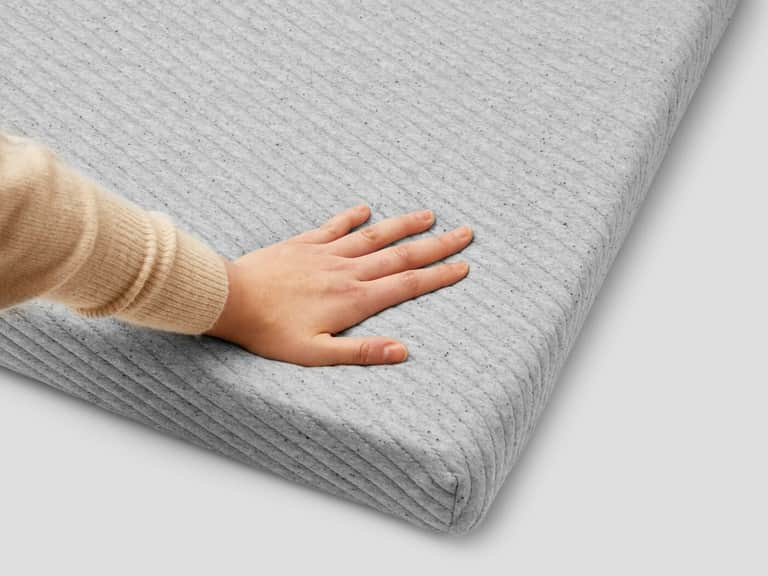
Cotton textiles may be used for covers or pads. Parents often value cotton for its familiar feel and the availability of organic certification. The construction still matters: a quilted layer can add loft, and a fabric description alone will not tell you how firm the complete sleep surface is. If a cotton layer is removable or washable, use the care directions on its label.
Wool can appear as a filling or layer in some mattresses and bedding. Its care requirements vary by construction. A wool component may need spot cleaning or professional care rather than machine washing. Do not assume that a material’s natural origin makes it suitable for every cleaning method, or that a product can be soaked without affecting its shape.
Latex may be used as a resilient mattress core or layer. Determine whether the latex is natural, blended, or certified, and whether it is enclosed in a removable cover. Latex cores are not generally treated like ordinary washable sheets; follow the maker’s instructions for airing, cleaning, and protecting the mattress.
Water-resistant barriers can be made from different materials and may be built into a mattress or included as a separate protector. They can help limit moisture reaching the mattress, but waterproofing, breathability, and surface feel are distinct features. Read the description and care label rather than assuming every barrier behaves the same way.
A washable protective layer: useful, with limits
Spills, perspiration, and diaper leaks can reach bedding during ordinary family life. A washable layer may be useful if it is made for the crib mattress, fits securely, and is compatible with safe-sleep recommendations. Its purpose is to simplify cleaning and help protect the underlying mattress—not to add a plush, pillow-like surface.
For example, an organic cotton crib mattress pad is described as a washable layer made from organic cotton, with a quilted construction and dimensions listed for a crib mattress. Those details may help a parent understand the product’s materials and intended role. Before using any pad, check its dimensions against the mattress, confirm how it attaches, and review the complete care and safety instructions. The product description alone cannot establish that it is suitable for every crib or mattress combination.
Secure fit matters. A layer that bunches, shifts, or leaves excess fabric at the edges is not a good fit. Do not stack multiple pads or use folded towels, blankets, or improvised liners to absorb moisture. If a pad becomes damaged, stretched, or unable to stay in place, stop using it and contact the manufacturer about replacement guidance.
A practical routine for crib mattress care
Good care is less about elaborate cleaning rituals than about following the instructions consistently. Keep the mattress manual and labels accessible; a care method that works for a removable cover may damage a mattress with an integrated cover or natural-fiber filling.
- Read the care label before the first use. Note whether the cover can be removed, whether spot cleaning is permitted, and what temperature or drying method is recommended.
- Use only a compatible fitted sheet. The sheet should fit the mattress snugly and remain smooth. Avoid adding loose layers beneath or above it.
- Respond to spills promptly. Remove the sheet and any approved washable protector. Blot the affected area rather than scrubbing aggressively, and use only the cleaning method permitted by the manufacturer.
- Allow damp components to dry completely. Follow the maker’s directions and avoid returning a damp cover or pad to the crib. Excess moisture can linger inside layers and may contribute to odor or material deterioration.
- Inspect seams, edges, and surfaces. Check periodically for tears, loose stitching, compressed areas, or damage. If a mattress is compromised, ask the manufacturer whether it should be repaired or replaced.
- Store or transport it carefully. Follow the manufacturer’s instructions for handling and storage. Do not fold, bend, or compress a mattress unless its design expressly allows it.
Do not use bleach, solvents, fragrances, or household sprays unless the care instructions explicitly permit them. A pleasant scent is not evidence that a surface is cleaner, and strong cleaning agents may leave residues or damage the fabric. Likewise, avoid taking a cover apart if the manufacturer does not describe it as removable; opening an enclosed mattress can compromise construction or safety features.
Choosing between two options
When comparing organic crib mattresses, make a short checklist rather than trying to rank every material as inherently best. First confirm that the product is designed for the crib and age range in question. Then review firmness and fit guidance, materials by component, certification scope, cleaning instructions, and the availability of replacement parts or customer support.
- Does the mattress fit the crib according to both manufacturers’ instructions?
- Is its surface firm and flat, without added cushioning or an unapproved topper?
- Which specific materials are certified organic, and by which standard?
- Are the cover or protective layers removable, washable, or spot-clean only?
- Can you follow the cleaning directions with the products and facilities available at home?
- Are the product’s claims specific enough to verify, rather than relying on vague environmental language?
There is no single material choice that suits every family or solves every sleep concern. A certified textile may matter to a household prioritizing documented fiber sourcing; another family may focus on a waterproof design or straightforward cleaning. Whatever the preference, keep the comparison grounded in verifiable details and a sleep setup appropriate for the child.
When questions call for expert advice
Product pages can explain construction, but they are not a substitute for personalized medical guidance. Ask a pediatric clinician about safe sleep, especially if your baby has a medical condition or you have questions about a particular sleep arrangement. Contact the mattress maker for fit, material, cleaning, or warranty questions. If a claim is unclear, request documentation that identifies exactly what is certified and what is not.
Organic materials can be one consideration in choosing nursery bedding, but a reassuring label should never distract from the basics: the correct mattress for the crib, a firm and flat surface, a snug fitted sheet, and a clear sleep space. Careful reading turns a crowded set of claims into a manageable decision. The best preparation is not a perfect label; it is a well-understood product used and maintained as intended.